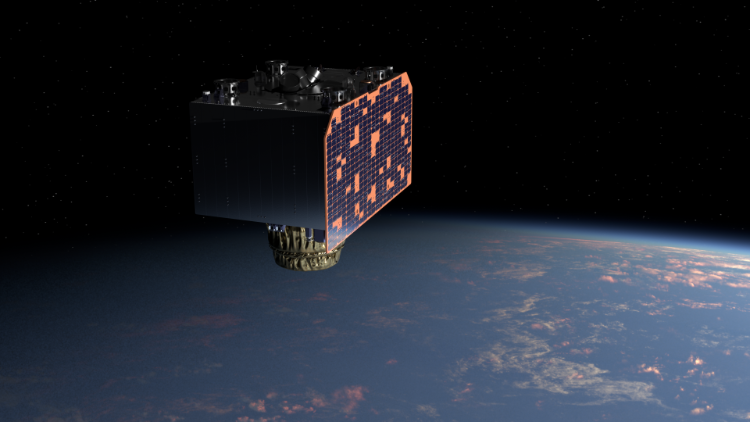
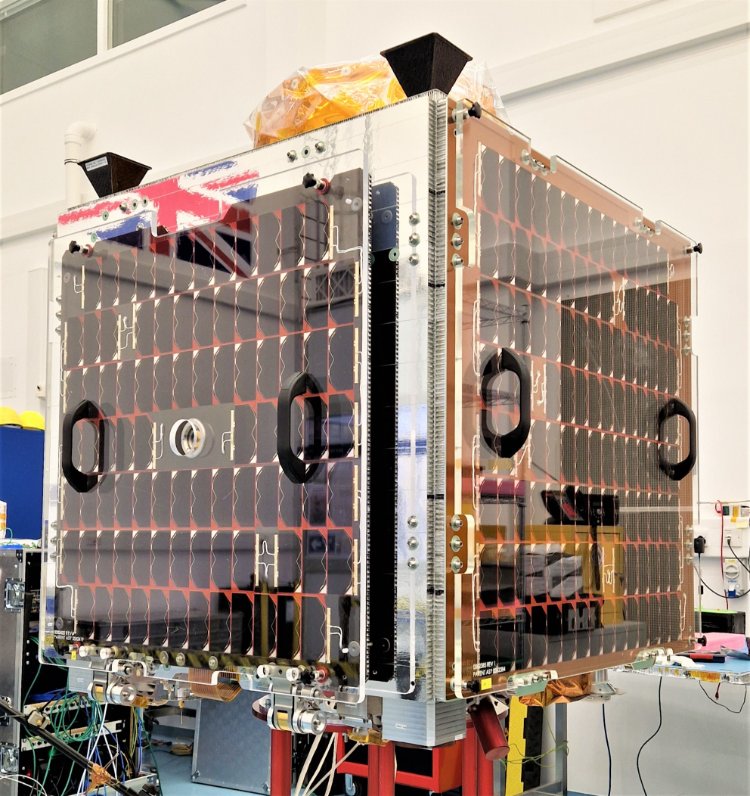
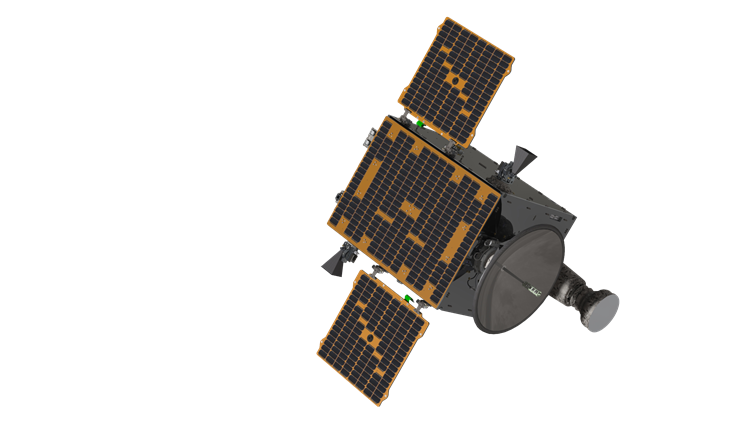
SSTL is building a 2nd and 3rd Mid Wave Infra-Red (MWIR) thermal imaging satellite for Satellite Vu. The cloned satellites are part of a planned constellation of MWIR spacecraft which will have the ability to measure the heat signature of any building anywhere multiple times a day, enabling SatVu to derive new insights in real time about building emissions, energy use and insulation.
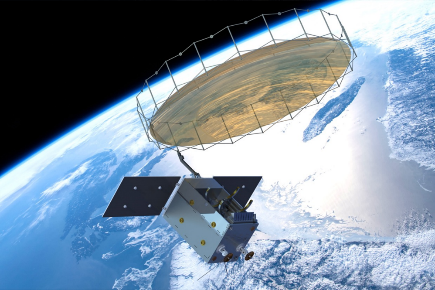
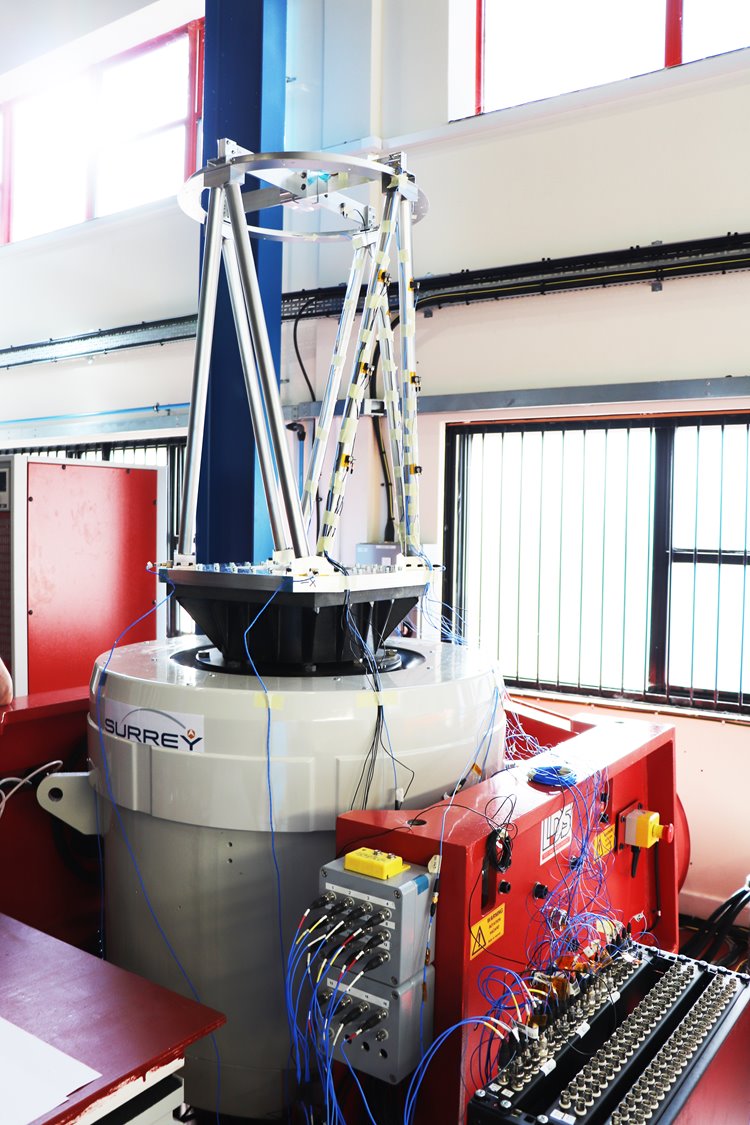
SSTL and Oxford Space Systems (OSS) have confirmed a partnership to build and launch an OSS Wrapped Rib antenna mounted to an SSTL CarbSAR satellite. The In Orbit Demonstration mission advances both companies' abilities, with OSS gaining space heritage, and SSTL building its ability to integrate capability from new suppliers. The work has been joinly funded by OSS, SSTL, Airbus Defence and Space, the National Security Strategic Investment Fund (NSSIF, HM Government's corporate venturing arm for national security and defence technologies) and is proving a ground breaking Synthetic Aperture Radar concept
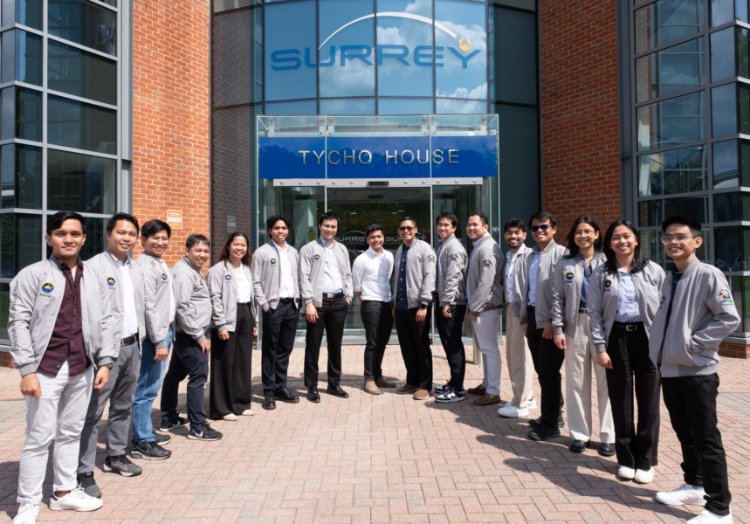
The 100kg THEOS-2A satellite project for GISTDA (Thailand) is centred around the transfer of knowledge to enable Thai engineers to design, manufacture, integrate, and test similar satellites in Thailand in the future. A total of 48 Customer Engineers will be involved in the programme over a period of four years, with training and mentoring taking place in the UK and in Thailand.
THEOS-2A is SSTL’s 20th Know-how Transfer programme and our second collaboration with Thailand - we previously trained customer engineers during the 1995-1997 Thai-Paht mission.
The Lunar Pathfinder spacecraft is designed to provide affordable communications services to lunar missions via S-band and UHF links to lunar assets on the surface and in orbit around the Moon, and an X-band link to Earth. Due to launch 2025, the Lunar Pathfinder spacecraft will be a mission enabler for polar and far-side missions, which, without direct line of sight of the Earth, would otherwise have to procure their own communications relay spacecraft. Lunar Pathfinder is a more cost effective alternative to Direct-to-Earth solutions and a credible alternative to institutional deep-space ground stations, offering orbiters and near-side missions a better availability, enhanced safety and improved data-rate.
SSTL is manufacturing a new very high resolution imager that delivers high quality imagery and high area coverage for pan-sharpened colour mapping and surveillance applications. The Precision imager is a compact design that utilises a novel sensor and innovative opto-mechanical techniques to achieve a swath of >9.5km and a GSD in panchromatic channel of 0.6m native. The PAN channel is used to sharpen four 1.2m GSD multi-spectral channels and through post-processing sub 0.5m GSD is achievable. Precision’s detector is a novel CMOS-in-CCD architecture resulting in low power consumption and read noise and time delay and integration capability. Teledyne e2V is providing the state-of-the-art TDI CMOS sensor.
SSTL is building the imager as part of ESA’s InCubed programme.